Saturday, August 29, 2009
Tutorials three, four and five
Due to long standing personal medical appointments i was not able to make these tutorials. But i went onto the new com tech blog and read what i missed, i also followed the directions as well and caught up on what i missed. I won't miss anymore classes and i really enjoy this course so im annoyed i missed it.

Tutorials three, four and five
Due to long standing personal medical appointments i was not able to make these tutorials. But i went onto the new com tech blog and read what i missed, i also followed the directions as well and caught
Lecture number 5
lecture number five for new com tech,
Jason Nelson screwing around,
This lecture was very raondom. I'm not sure what i learnt or what the topic was but Jason spent the hour talking about dot com boom/crash and showing us sites such as elf world. It was a really fun lecture that pretty much showed how funny and useful the internet can be (as well as being full of a lot of crap that makes it hard to find things). During the lecture we learnt that at 8.30 am there was a 2.1 earthquake in Alaska and it takes 900 pings to send data to Rwanda (which is apparently slow?). Jason also spoke about Cadbury owning google and its headquarters being in Tasmania (joke by the way). He told us about Woofer as well which is like the opposite of Twitter (first there was max 140 words and now there's mi 1400 words). We also found out we were in Sydney during the lecture and that Elf world has a lot of weirdos. The main thing we were told is that facebook is number one rank for social networks (although I prefer myspace) whereas myspace is number 2 and twitter has gone up from number 12 (last year) to number 3. Jason predicts that twitter will reach number 2 then drop and that specialised social networks (like elf world) while start rising.
Jason Nelson screwing around,
This lecture was very raondom. I'm not sure what i learnt or what the topic was but Jason spent the hour talking about dot com boom/crash and showing us sites such as elf world. It was a really fun lecture that pretty much showed how funny and useful the internet can be (as well as being full of a lot of crap that makes it hard to find things). During the lecture we learnt that at 8.30 am there was a 2.1 earthquake in Alaska and it takes 900 pings to send data to Rwanda (which is apparently slow?). Jason also spoke about Cadbury owning google and its headquarters being in Tasmania (joke by the way). He told us about Woofer as well which is like the opposite of Twitter (first there was max 140 words and now there's mi 1400 words). We also found out we were in Sydney during the lecture and that Elf world has a lot of weirdos. The main thing we were told is that facebook is number one rank for social networks (although I prefer myspace) whereas myspace is number 2 and twitter has gone up from number 12 (last year) to number 3. Jason predicts that twitter will reach number 2 then drop and that specialised social networks (like elf world) while start rising.
lecture number 4
lecture number four for new com tech,
big screen to small screen (which is very very big anyways).
This lecture was set in the format of a timeline so i am uploading the lecture (with my own words as my own timeline) in a file/picture thingy, well i was going to but i cant work out how to, so copy and paste.
1895
Birth of cinema (first movies were 20min everyday things (people sneezing)
1906
First feature length narrative (made in Australia ‘Ned Kelly’)
1927
“Talkies”, first dialogue feature. Before this they had live orchestras
1929
First all colour recorded movie ‘I’m gonna show’. Before this movies were recorded in black and white and then coloured.
1933
First drive in theatre
1937
1st dialogue, singing, colour, full-length, commercially released animation ‘snow white’
1939
TV joined New York trade fair
1952
3. D (which the 4th final destination movie will be in whooot whoo)
1955
Movies on TV
1956
VTR (videos used by stations, not yet available till public)
1959
Tingler- time of percepto vision (things coming at you), electric jolts under chair (made people scream), aromo-rama (smells in front of air conditioner)
1963
VTC for public (only 30000 sold). Multiplex theatre, blockbuster movies at home.
1967
Sony made VCR and portopack, portably record images
1970
IMAX, as screens got smaller and smaller they made a huge one
1972
Pay TV
1985
First blockbuster video store
1986
First use of cgi, luxar by Pixar
1995
First full cgi toy story
1997
DVD’s released as format for movie watching
1972- 1997
Internet
2001
BMW driver series of 8 short films of 10 mins (watched them all, awesome)
big screen to small screen (which is very very big anyways).
This lecture was set in the format of a timeline so i am uploading the lecture (with my own words as my own timeline) in a file/picture thingy, well i was going to but i cant work out how to, so copy and paste.
1895
Birth of cinema (first movies were 20min everyday things (people sneezing)
1906
First feature length narrative (made in Australia ‘Ned Kelly’)
1927
“Talkies”, first dialogue feature. Before this they had live orchestras
1929
First all colour recorded movie ‘I’m gonna show’. Before this movies were recorded in black and white and then coloured.
1933
First drive in theatre
1937
1st dialogue, singing, colour, full-length, commercially released animation ‘snow white’
1939
TV joined New York trade fair
1952
3. D (which the 4th final destination movie will be in whooot whoo)
1955
Movies on TV
1956
VTR (videos used by stations, not yet available till public)
1959
Tingler- time of percepto vision (things coming at you), electric jolts under chair (made people scream), aromo-rama (smells in front of air conditioner)
1963
VTC for public (only 30000 sold). Multiplex theatre, blockbuster movies at home.
1967
Sony made VCR and portopack, portably record images
1970
IMAX, as screens got smaller and smaller they made a huge one
1972
Pay TV
1985
First blockbuster video store
1986
First use of cgi, luxar by Pixar
1995
First full cgi toy story
1997
DVD’s released as format for movie watching
1972- 1997
Internet
2001
BMW driver series of 8 short films of 10 mins (watched them all, awesome)
Monday, August 17, 2009
Homework!
We were given homework after the lecture (week three), to watch a movie or episode and see if they follow these rules (shown in the blog before this) and the camera shots.
i chose to watch and episode of the old Australian drama, Blue heelers (actually i chose the first episode of the series). I focused on one scene, at the beginning where three of the main characters meet for the first time. When introducing these three characters close ups were used (for all three). An establishing shot (the long shot to show where) was used after first introducing the first two characters (mainly in order to bring in the third character and explain what the other two were doing. This establishing shot worked hard it showed where, when, why and how (two policemen radaring cars along the highway in the afternoon). This scene very much kept to the four rules as it showed the third charcter in her car. The camera was set so that the car framed her while keeping her in a close up but to the side of the camera with room to move. In all the rules were effective in adding to the meaning of that scene.
Sarmi Salami
i chose to watch and episode of the old Australian drama, Blue heelers (actually i chose the first episode of the series). I focused on one scene, at the beginning where three of the main characters meet for the first time. When introducing these three characters close ups were used (for all three). An establishing shot (the long shot to show where) was used after first introducing the first two characters (mainly in order to bring in the third character and explain what the other two were doing. This establishing shot worked hard it showed where, when, why and how (two policemen radaring cars along the highway in the afternoon). This scene very much kept to the four rules as it showed the third charcter in her car. The camera was set so that the car framed her while keeping her in a close up but to the side of the camera with room to move. In all the rules were effective in adding to the meaning of that scene.
Sarmi Salami
Lecture number three!
Lecture number three for new com tech,
Understanding film! I was so looking forward to this week because film is my passion! Week three's lecture was all about shots (the shots taken to tell the story of a movie or television show, actually pretty much any piece with shots in it). There are various shots, the three main ones are: long shot, wide shot and close up. From these three shots other shots can be created such as a long long shot, medium long shot, mid shot, medium close up, big close up or extreme close up. Those in the business ( :) ) refer to these shots as ls=long shot, ws=wide shot or cs=close up, with m, l and e ect, standing for sizes. As with any written stiry a film must also show who, what, where, when and how. The w's (and h) can be shown through certain shots. Starting with who, as it is the most important part of a story (the characters make people want to follow the story), is usually shown by a close up. the close up shot shows the character in full detail. Secondly what is shown by a mid shot. this is because is shows the subject (who) performing an action. the mid shot can see the character and action in a single shot. where can be shown through a long shot. This shot is usually shown at the beginning and is commonly known as the establishing shot because it establishes where the next scene will be takiong place. The long shot is used because of distancing and because it can show the spacial relationships between characters (for example if they work together). When can be shown in various ways as it is hard to convey but the most common shots are the wide shot and the close up. A wide shot can show time through either displaying a setting sun (time of day) or by showing vechiles and buildings (time of year/ year). The wide shot can also convey a passing of time (camels walking over a horizon (jump shots can also be used to convey length of time (a person drinking coffee, eating, watch, drinking))). A close up can be used to show a watch of clock on the wall (time of day). Why can be show using the big close up. The big close up can focus of characteristics of the character such as their eyes, or on a photoframe. This can reveals the reasons (why) behind their actions taken throughout the piece. How can be shown by a single meduim close up or by a series of medium close ups. These close ups can show the method taken. There are four rules (guidelines) to keep in mind when shotting a scene. the first refers to headroom. The character must be put in the camera so that their head and body aren't cut off but so that they have some room to move. The second is talking room. It follows the same lines as headroom. In both of these guidelines they are used to allow the viewer to understand spacial relationships between characters and to make the scene more realistic. For example if the chacter is shown on the left edge of a shot they might seem to be talking to a brick wall or on the other side they may seem as if they are projecting their voices to far. simularly though these techniques can be used if two charcters are close or far away (to show distance). Next is the rule of thirds. If a shot has four lines drawn through it, two horizontally, two vertically, then there are four points of intersection. the subject should only ever cross two points of intersection and therefore will always be to the side of a scene as that is where the human eye is naturally drawn. lastly there is the 180 degree rule. This is important as ignoring it will confuse the viewer. when two characters share a scene there is an invisible line of sight. All of the scenes (camera angles) must be shot on only one side of this line. if is swaps over then the characters swap sides and confuse the audience. This rule can only be broken if the cameras movement to the other side is shown. In conclusion, each shot must serve a purpose, must drive the narrative in a way, each shot must say something new.
Sarmi Salami
Wednesday, August 12, 2009
lecture number two!
the second lecture for new com tech,
The second lecture for new com tech was taken by THE stephen stockwell. The topic was 'history of computing'. This lecture was interesting as it started on the topic of the enigma code and finished somewhere around mac vs pc. The most interesting part for me was seeing the inportance of computers (or the equivalent) during war times. The importance was mainly seen in Alan Turing, a man who was hired by England, as well as many others, as a puzzle breaker to 'crack the enigma code'. Turing devised a plan to produce a machine that somewhat mimicked the enigma code (called a bomb). The idea was that this would allow the English soliders to understand the code. this 'bomb' became the prototype of the modern computer. Stephen Stockwell also shared that Alan Turing commited suicide after the war because he was gay, and somehow no longer useful to anyone...This was after he also created and offered more inventions to the world. The transformation of the modern day computer/internet began with a huge non-portable machine, which then became smaller, then easier, then there was internet, then it was portable, now its all in a phone. The transformation was slow, but when you look back at what it started at, you can't help but be amazed by the genius behind the whole process.
Sarmi Salami
tutorial 2..gettin into the new com tech stuff...
The second tutorial for new com tech,
ok well the second tutorial for new com tech started great! we had free time to check emails while all the newbies caught up. I was so loved with emails/comment/notifications on facebook, myspace, twitter and hotmail....Anyway then we started actually learning things, so i logged off of all of my accounts (yes, all of them) and started work. our subject was convergence. me and the people either side soon found a simple definition and blogged it (can be seen down there>> as "it is convergence". After that we were to choose four new convergence technologies (two were to be communication types, such as phone or something like that). For me this was hard. Mainly because im not into new communication technologies so i have no clue what examples of new convergence technologies would be. after a google search i decided to choose my phone (a smart phone), a Japanese robot house cleaner, a mobilr wheelchair sort of thing that i saw on top gear (awesome show), and a voice control for an ipod (because my sister has one and im constantly mocking her for her laziness). It took me a while to load all the photos and place them where i wanted them...it didnt load the way i wanted but it worked ayways :). then we learnt how to edit web pictures. i choose to edit an i dog because they are sooo cute :). This was easy so i changed the picture then upoloaded a before and after blog...This showed the end of class and i logged off and left.
Sarmi Salami
ok well the second tutorial for new com tech started great! we had free time to check emails while all the newbies caught up. I was so loved with emails/comment/notifications on facebook, myspace, twitter and hotmail....Anyway then we started actually learning things, so i logged off of all of my accounts (yes, all of them) and started work. our subject was convergence. me and the people either side soon found a simple definition and blogged it (can be seen down there>> as "it is convergence". After that we were to choose four new convergence technologies (two were to be communication types, such as phone or something like that). For me this was hard. Mainly because im not into new communication technologies so i have no clue what examples of new convergence technologies would be. after a google search i decided to choose my phone (a smart phone), a Japanese robot house cleaner, a mobilr wheelchair sort of thing that i saw on top gear (awesome show), and a voice control for an ipod (because my sister has one and im constantly mocking her for her laziness). It took me a while to load all the photos and place them where i wanted them...it didnt load the way i wanted but it worked ayways :). then we learnt how to edit web pictures. i choose to edit an i dog because they are sooo cute :). This was easy so i changed the picture then upoloaded a before and after blog...This showed the end of class and i logged off and left.
Sarmi Salami
Tuesday, August 4, 2009
Before and after of the idog
 I DOG (for the ipod) >>>>>>
This is the before picture of an idog (the newest and most decorated version).
 <<<<<<< I DOG
this is the after picture of my amazing i dog...whooot whoo
convergence technologies (4 examples)
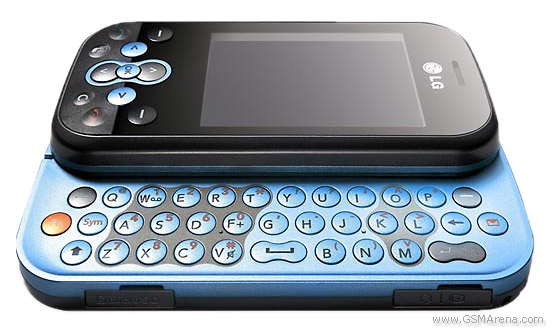
this is a smart phone>>>>>>
or at least this particular brand is called a web slider. This phone was created to mirror all of the attributes of a computer, phone (both cellular and not) as well as a pda (aka. personal planner or assistant). It even has the numbers/letters set out as it would on a computer and when the slide is shut it can be touch screen.


 <<<<<<<
ok well, now that we are to slack to actually move our finger around on the controls of any (new/old) ipod we can hook it up to the slightly bulky contraption and tell it which songs to play or what to do...nice and slack like the way which our generation appears to be heading lol....i wonder if you can yell instructions across a room?
 Mobile wheelchair>>>>>>mobile wheelchair
As seen in top gear (amazing tv show) this is the new type of wheelchair. No it cant be driven on the road yet, but it'll happen....when it can go faster. But even though it is old granny speed Richard does enjoy it!
>
or at least this particular brand is called a web slider. This phone was created to mirror all of the attributes of a computer, phone (both cellular and not) as well as a pda (aka. personal planner or assistant). It even has the numbers/letters set out as it would on a computer and when the slide is shut it can be touch screen.
<<<<<<<ok well, now that we are to slack to actually move our finger around on the controls of any (new/old) ipod we can hook it up to the slightly bulky contraption and tell it which songs to play or what to do...nice and slack like the way which our generation appears to be heading lol....i wonder if you can yell instructions across a room?
Mobile wheelchair>>>>>>mobile wheelchair
As seen in top gear (amazing tv show) this is the new type of wheelchair. No it cant be driven on the road yet, but it'll happen....when it can go faster. But even though it is old granny speed Richard does enjoy it!

It is convergence?
Simply put convergence can be best defined as two or more things coming (converging) together.
In technology and example of convergence can be seen as something such as a smart phone. it is a complex piece of technology which allows for all new communication technologies, such as internet, television, weather updates and games (as well as all of the old telephone uses), to be easily accessible as long as you have your phone on your persons. Convergence is simply the next step in technology overtaking the world, such as displayed in the action thriller 'pulse'.
Sarmi Salami
In technology and example of convergence can be seen as something such as a smart phone. it is a complex piece of technology which allows for all new communication technologies, such as internet, television, weather updates and games (as well as all of the old telephone uses), to be easily accessible as long as you have your phone on your persons. Convergence is simply the next step in technology overtaking the world, such as displayed in the action thriller 'pulse'.
Sarmi Salami
Sunday, August 2, 2009
first lecture: surprise
The first lecture for new communications technologies, or new com tech,
I went to the first lecture for new com tech, even though it was at 8 in the morning and unless I'm working i try to sleep in until sometime past 9. This lecture, like the tutorial, was unlike what i had expected, or, you could say, stereotyped it as. It began with a run-threw of the course outline again but it focused on some points that weren't covered in the tutorial (such as the weekly topics). The time was also spent but discussing/explaining what new com tech (new communication technologies) really is. The lecture, and lecturer were both actually interesting and i was most surprised with the likeness between this class and styles and genres of journalism (which i took last semester). by this i refer to the outline of the development of technologies overtime and the effect of that. this was also discussed in styles and genres of journalism as most believe it is the transformation of the Internet that seems to be destroying the benefit of the standard newspaper. Communication technologies were grouped, beginning with oral and graphic technologies being classed as 'old'. the list also included written (newspapers or letters, which bridged gaps between people overseas), radio, telephone (land line), and television (the one way media). the list was finished with mention to the new technologies computer, Mobile phone and Internet and then it was seen how all three combine to create this world of technology allowing everything to be at ones fingertips. During this evaluation Josh Nicholas, the lecturer, asked surveillance questions, such as who has a mobile phone, or who has a smart phone. i was shocked to see how much of the new technologies i use in everyday life as i am seen as someone who is against to much modernisation in technology (such as events the erase the newspaper as i intend to be a journalist). i am also very computer illiterate yet as i realised I'm more advanced than most. The lecture only went for an hour but it was very surprising, both as a shock to what i had pre-assumed it would be like and as a shock to myself, as what i have assumed i was like. I really think I will like new com tech, even though i didn't want to do it at first.
Sarmi Salami
first tute: refreshing :)
First tutorial for new communications technology, or new com tech,
OK well coming into this course I assumed that it would be a somewhat technologically advanced class which would completely baffle me, leaving me with a barely passing grade. Yet as i realised in the first tutorial, it would be a step by step guide to all things considered as new technologies. Our class was taught by Kaya, who was able to guide us through each step of starting a GMail account and creating our first blog (which, as I am a pen and paper person not a computer person, is not small feat). The class began with a run-threw of the course outline, as seen on the learning at Griffith site. All assignments were explained, including the blog which we began that day. I'm not a blogger sort of person so at first i was unsure of what would be expected, but that was quickly explained. We then logged onto the computers, an apple computer which i have never used before, but we were guided by our tutor who showed us a mirror version on the projector screen of what we were seeing on our computers. Using FireFox we all created GMail accounts. this lead us straight to creating blogs. All of us were stumped when it came to choosing a display name and URL. the pressure was on us for it to be original and nothing to do with fluffy cats (as Kaya seemed to really dislike them). I choose Sarmi Salami as it is my nickname (due to me pronouncing my friends names wrong) for my display name and i choose mcpartygrl for my URL (because i work at McDonald's and I am the party Girl). We continued to edit some aspects of the web page and then it came time for picture choosing. I searched both my myspace and facebook accounts only to discover that i don't have any pictures of just me. So i just choose i recent picture and uploaded that. i then began to add all of the people sitting around me. As Kaya pointed out, when we were stuck we could ask them for help or look what they'd written, so i added as many people as possible. surprisingly i really enjoyed this class as i was able to follow everything unlike i had assumed would happen. Overall i think i will like New com tech (Kaya says the cool people shorten it).
Sarmi Salami!
Subscribe to:
Posts (Atom)
